Sponsored by the National Association of Photoshop Professionals. Learn More

Tutorials | Page 25


Color Theory 101, Part 3

Ok, so we have now talked about colors that are similar. Now let’s talk about colors that are disimilar. To do so, let’s take another look at the color wheel. … Continue reading

Color Theory 101, Part 2

Last week we began talking about color theory and we discussed analogous color. Let’s talk about this more. Last week, we mentioned the beginning stages of what analogous color is. … Continue reading

Color Theory 101, Part 1

You may never think about color when you design. You may just think what looks good is what is good. Well think again, because it goes much deeper than that. … Continue reading

An Application That Has Me In Stitches

I first saw Realviz’ Stitcher (3.0 for the Mac) demonstrated at New York’s Mac World Expo. Ken Eyring, Realviz senior technical sales person, did a great job of putting this … Continue reading

Duotone vs. Multichannel, Part 2

In the first installment of this series, we looked at duotone color mode, how it works, and how you can control it. Now let’s explore the multichannel color mode, a … Continue reading

Duotone vs. Multichannel, Part 1

A great way to save on your printing costs is to use two inks instead of four. You can also produce some incredibly striking images, and some cool effects, for … Continue reading

Simple Photoshop Distortion Corrections

As a photojournalist, I’ve always been partial to my “normal” lens: the wide angle. Now, as a digital photojournalist, my wide angle attachment stays on my camera about 80 percent … Continue reading

Keeping Your Balance

Film photographers have always faced a balance challenge… color balance, that is. Print film technology in the past few years has improved the situation but transparency shooters are still faced … Continue reading

Focus on Sharpening, Part 3

In the first two parts of this series, we looked at the theory of sharpening and the commands and tool available in Photoshop. In this installment, we’ll look at some … Continue reading

Focus on Sharpening, Part 2

In the first installment of this series, we looked at the theory of sharpening and how it works. Now let’s take a look at the Sharpen filters and the Sharpen … Continue reading

Pages: 1 2 3 4 5 6 7 8 9 10 11 12 13 14 15 16 17 18 19 20 21 22 23 24 25 26 27 28 29 30 31 32 33 34 35 36

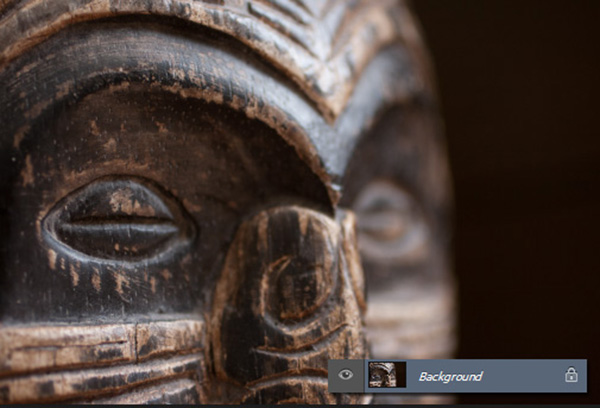
Create A Composite Layer

If you have a multilayer composition and you
want to apply an effect to all the layers at once, don't flatten the layers--use a composite layer instead. Hide the layers you want excluded, and press Shift-Command-Option-E (PC: Shift-Ctrl-Alt-E). A new layer will be created at the top containing a merged copy of all the visible layers.

Another option is to create a new layer at the top of the stack and make it active. Command-click (PC: Ctrl-click) each layer you want to include to make those layers active, as well. Press Option-Command-E (PC: Alt-Ctrl-E).
by Colin Smith

Read More Tips

Tip of the Day
 
 
Kelby Training